When Climate Change shapes everyday life
The climate crisis is becoming increasingly visible—especially in cities. Today, 55% of the world’s population lives in urban areas. By 2050, that figure is expected to rise to 68%, according to UN-Habitat, the United Nations program for human settlements and sustainable urban development.
At the same time, Europe’s climate goals—including climate neutrality by 2050—put pressure on urban centres to adapt to extreme weather events, which are occurring ever more frequently. With roughly half of the world’s population now living in urban areas, cities find themselves on the front line—both as hubs of innovation and as hotspots of climate risk.
As economic centers with dense populations and vast built infrastructure, cities are particularly vulnerable to heat, flooding, and sea-level rise. As Laia Fernández, expert in resilience and climate adaptation at ICLEI, explains, “Accelerated urbanisation has quickly transformed the urban surface of our cities and has intensified what we call urban heat islands. While at the same time, all cities are experiencing unexpected and extreme climate events for which they were not planned and for which they haven’t been prepared. So we have heatwaves, flooding, wildfires, heavy storms, and so on, and they are becoming more common every day and heighten the risk to our urban populations.”
According to the United Nations, more than two billion urban residents could be exposed to an additional +0.5 degrees Celsius of warming by 2040. Already, 1.4 billion people live in low-lying coastal cities increasingly threatened by sea-level rise and storm surges. In many places, climate conditions will shift permanently—toward drier or wetter extremes—posing serious challenges for infrastructure and daily life.
Climate impacts do not fall evenly. Vulnerable and socioeconomically disadvantaged groups—including migrants, older people, people with disabilities, and those with chronic illnesses—are often the hardest hit. Many already live in precarious conditions. More than 2.8 billion people worldwide face inadequate housing, including 1.1 billion living in informal settlements and slums.
“Vulnerability is a key aspect of social difference in cities, which means that low-income groups and people living in informal settlements, people living in areas where there’s no adequate infrastructure, urban infrastructure, social infrastructure, or sanitation infrastructure—they experience higher risk, and they are less resilient when there is a climate shock,” says Tucker Landesman, senior researcher at the International Institute for Environment and Development (IIED).
Even in Europe, extreme weather events reveal stark inequalities. Fernández points to the 2003 heatwave: “If we look at the 2003 European heatwave that caused thousands of deaths, it gives us ideas of how vulnerable populations face much higher risks: migrants and temporary workers who often do physical work in the open air, elderly who struggle with high temperature, low-income families that struggle to cope with the electricity bills, people with disabilities and the lack of targeted emergency planning for them, those with poor health, pregnant women, and so on.”
At the same time, climate change, conflicts, and disasters are accelerating urban migration. Cities are expanding faster than infrastructure can adapt, reinforcing cycles of vulnerability.
This is where RETIME comes in.
This EU co-funded project aims to equip European cities with tools to detect risks early and respond more effectively to extreme weather. Pilot cities include Lisbon (Portugal), Žilina (Slovakia), and Tartu (Estonia), each with distinct local challenges. Project coordinator Catarina Ferreira da Silva explains: “Urban areas are increasingly vulnerable to hazards, either natural or human hazards or disasters, for instance heavy winds, flash floods, hot and cold waves, depending on if we are in the south or in the north of Europe. And the fact that there is increasing urbanisation and that we waterproof the soils with cement and all the surfaces. […] It’s important that the public authorities have tools and means to face these hazards, these risks of climate change and extreme climate events so they can help citizens to confront these issues.”
At the heart of her project is a digital tool that aggregates – among others – data from Copernicus, Meteoalarm, and builds databases. It links historical events with time-series data to simulate future scenarios — assessing what happens if cities fail to act and what damage can be avoided through prevention. “So we have a history of events, a history of time series when specific situations occurred — landslides, storms, etc. —and what were their consequences. […] And if we simulate an increase in climate change events, what could be the consequences of doing nothing or something; if we changed and prevented the risks, what would we avoid by doing so,” she explains.
Beyond modeling, the project is developing four complementary solutions: an automated warning system, a virtual building model to detect vulnerabilities, a renovation passport to strengthen resilience, and a platform called Resilience Knowledge Hub to support informed decision-making.
Engaging local communities is central. In Lisbon, residents and building associations were consulted early on. “We invited several of these representatives, for instance, the citizens’ association and also the inhabitants and the building owner, the association that manages all the buildings […] We met them first to ask for their needs and their perception of the risks of the neighborhood. […] And now we are putting in place some sensor tools in some of the buildings […] We explained to the representatives why we need to gather this data during a period of time so that we know what the humidity, air pollution, and temperature inside the buildings are.”
The goal is to ensure that adaptation measures respond to real needs, not abstract projections.
The success of urban planning concepts largely depends on how well they are embedded in the overall context, as Fernández emphasizes: “When urban planning departments work on a city’s adaptation plan, it should not be assumed that a particular solution that, for example, has proven effective in one location will also be effective in another one. This means that all solutions are contextual. All plans need to be looked at the neighborhood level.”
Scaling up from pilot projects to city-wide implementation is complex. Pilot initiatives operate within clearly defined partnerships and funding structures. Municipal governance, by contrast, often requires coordination across departments that do not naturally collaborate. “In some cases, we’ve seen municipal governments where those who are closest to informality and social housing do not have the expertise on climate. So they’re not thinking about it. And it’s not as if they’re not smart people; it’s not their area of expertise […] – it’s a siloed governing system,” explains Landesman.
Long-term financing presents another challenge. Climate adaptation delivers benefits over decades, while political systems operate on much shorter electoral cycles: “If you are a local government and you have a very cash-strapped budget, are you going to maximise the number of units you can build or are you going to spend that money to build fewer units but ones that are climate resilient and low carbon? Do you want to win your next election?” asks Landesman.
When political priorities shift, long-term adaptation strategies can stall—particularly in communities with limited influence.
Implementation is most difficult where it is most urgent—in social housing and densely populated neighborhoods. Many buildings are aging, poorly insulated, and highly vulnerable to heat and unhealthy indoor conditions. Residents often lack the means to adapt independently and rely on municipal decisions.
Fernández argues that climate adaptation must extend beyond technical fixes. Social justice, she says, is frequently overlooked in local adaptation plans: “Empowering communities through engaging with grassroots organizations is, to me, what brings justice to those neighborhoods because no one better than the local communities know their own history and their own needs. But to actually make that happen, local governments need capacity development to create such connections and actually know how to engage and amplify the voices of local communities, besides having the funding to do so, which sometimes is tricky.”
Vulnerability is not accidental. It reflects past political decisions, investment patterns, and structural inequalities. Adaptation efforts can reduce these disparities or entrench them further.
Projects like RETIME make risks visible and support more informed decision-making. But technology alone is not enough. Policymakers must commit to long-term priorities if they want to ensure that marginalized communities benefit. “I don’t think cities can keep looking away anymore; it is time to ensure that no one is left behind, because growing inequalities undermine urban safety and well-being. Unless we approach this issue by focusing on our entire population—especially the most vulnerable—and applying an equity perspective, we will not move toward more just cities.”
Urban resilience will ultimately depend not only on innovation but also on whether cities choose to pursue adaptation through the lens of equity.
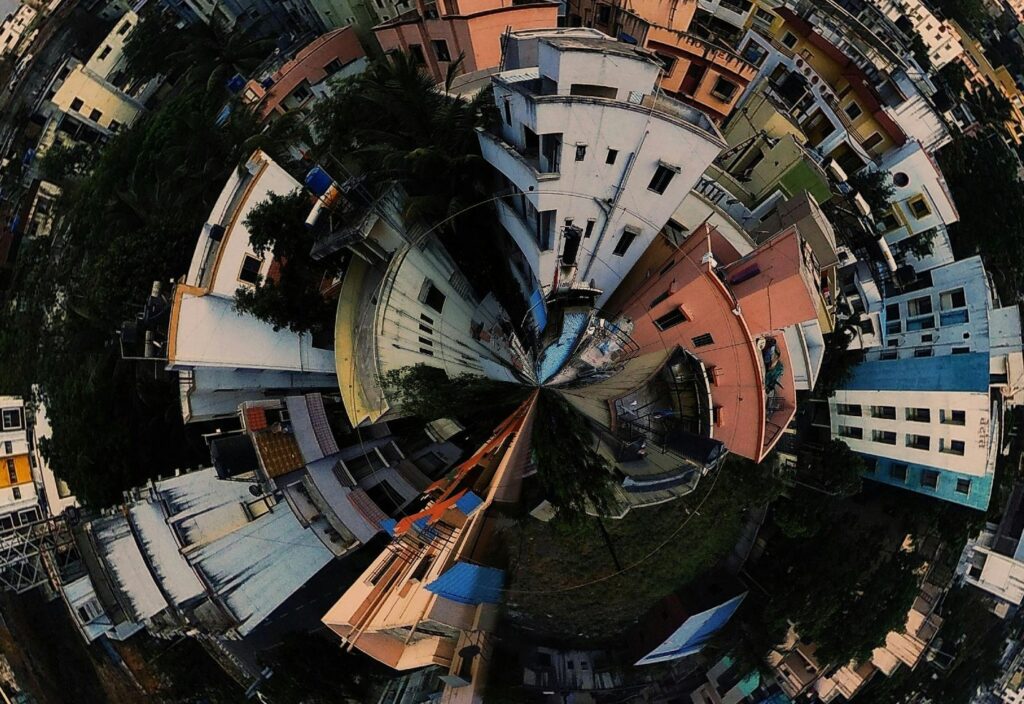
Photo credits to Rahul Shah via Pexels